We've Entered the Era of Creators 2.0
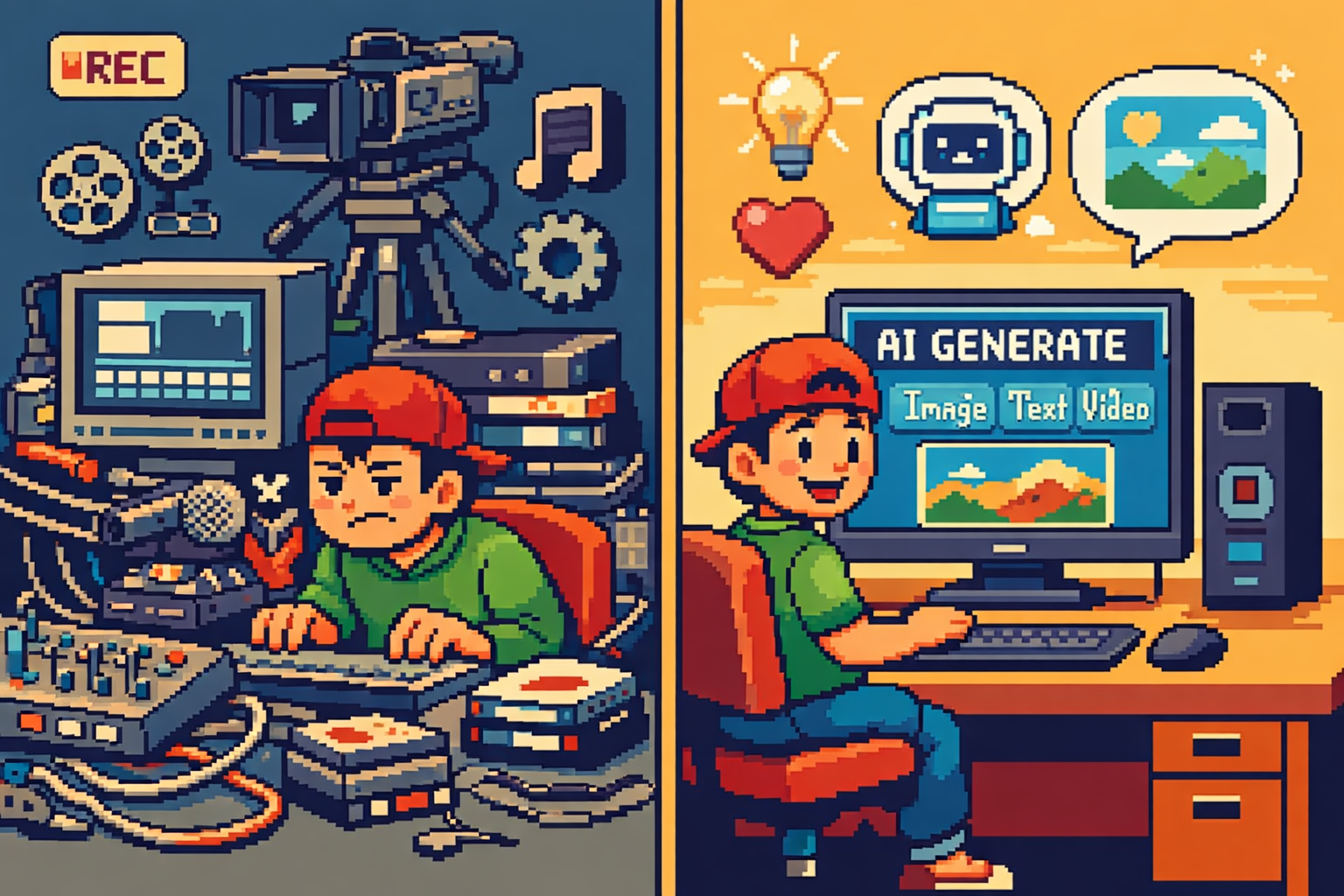
We’ve Entered the Era of Creators 2.0
Twenty-something years ago, there was a promise: anyone can be a content creator. Share your ideas with the world.
And it happened. Blogs exploded. YouTube turned bedroom creators into celebrities. Social media made building an audience almost effortless. Podcasts gave everyone a radio show. Music streaming platforms launched stars from laptops.
The tools were accessible. The platforms were free. The opportunity was real.
But there was a catch.
The Price Was Time
Creating anything worthwhile took time. Massive amounts of time.
Want to make a video? Learn editing software, lighting, audio processing. Want to build an app? Spend months learning to code. Want to produce music? Master complex DAWs and music theory.
You had two options: pay someone with skills, or invest years developing those skills yourself.
That was Creators 1.0. The barrier to entry was low, but the barrier to competence was high.
Then I Watched My Kid Build a Game
My child sat down with zero coding experience. No tutorials. No courses. No Stack Overflow searches at 2 AM.
Just Claude, a browser, and a series of prompts.
Two hours later: a playable game. A mashup of Pacman and Minecraft that actually worked.
That’s when it hit me. We’re not heading toward something new.
We’re already there. Welcome to Creators 2.0.
What Changed
The ceiling collapsed.
Anyone can now write a book. Build a game. Produce a video. Compose music. Design graphics. Create tools that once required entire teams.
The technical barrier—the years of learning, the complexity, the specialized knowledge—it’s gone.
What matters now isn’t whether you can create. It’s what you choose to create and how well you can work with AI to bring it to life.
This Blog Is Proof
I’m not a developer. I can’t code, apart from some basics.
But I wanted this blog. I wanted independence. Control. No platform dependencies.
So I spent time struggling with HTML, CSS, JavaScript, Astro, Git, deployment pipelines. Copying examples. Googling errors. Making it work without really understanding why.
It took time. Lots of it.
Now? I write. I focus on ideas. Claude Code handles the technical parts. I describe what I want, and it builds it.
The blog you’re reading was built this way. The scheduled publishing system? AI. The automation? AI. Even this post? Written by me, but refined and improved through conversation with AI.
I still need to know what I want. I still need to have something to say. But the technical execution? That’s no longer the bottleneck.
So What Happens Next?
When everyone can create anything, what becomes valuable?
Not the ability to create—that’s commoditized now.
Maybe it’s knowing what to create. Or why you’re creating it. Or having something worth saying in the first place.
The barrier to making something has collapsed.
But the barrier to making something that matters? That’s still as high as ever.
And maybe that’s exactly as it should be.
What do you think changes when everyone can create? I’d love to hear your thoughts.
Thanks for reading! If you'd like to share your thoughts send me an email.