Don't Make Me Think About Your Email
Don’t Make Me Think About Your Email
Here’s the message I got in my Imbox this morning. (I use “Imbox” since I use Hey as my email provider—more on that here).
What does it say? To be honest, nothing actionable or informative to me.
Here’s What Happened
- There’s a fitness club chain called Zdrofit
- I visited one of their locations a couple of times
- I received this email:
Hey! With the start of the new year, we’re sharing good news—starting January 7, we’ve extended opening hours at selected Zdrofit clubs! 🏋️♀️
New hours: 📅 Mon. – Fri.: 6:00 – 23:00 📅 Sat. – Sun.: 7:00 – 22:00
Not sure if this change applies to your club? Check the website or ask on-site. 📍
Well. It’s not useful to me.
What They’re Really Saying
“We’re too lazy to check if this information is useful to you, so we’re sending it anyway. You figure out if it’s relevant. By the way, we don’t care if you actually wanted this email or not.”
That’s not how you build trust. That’s how you train people to ignore you.
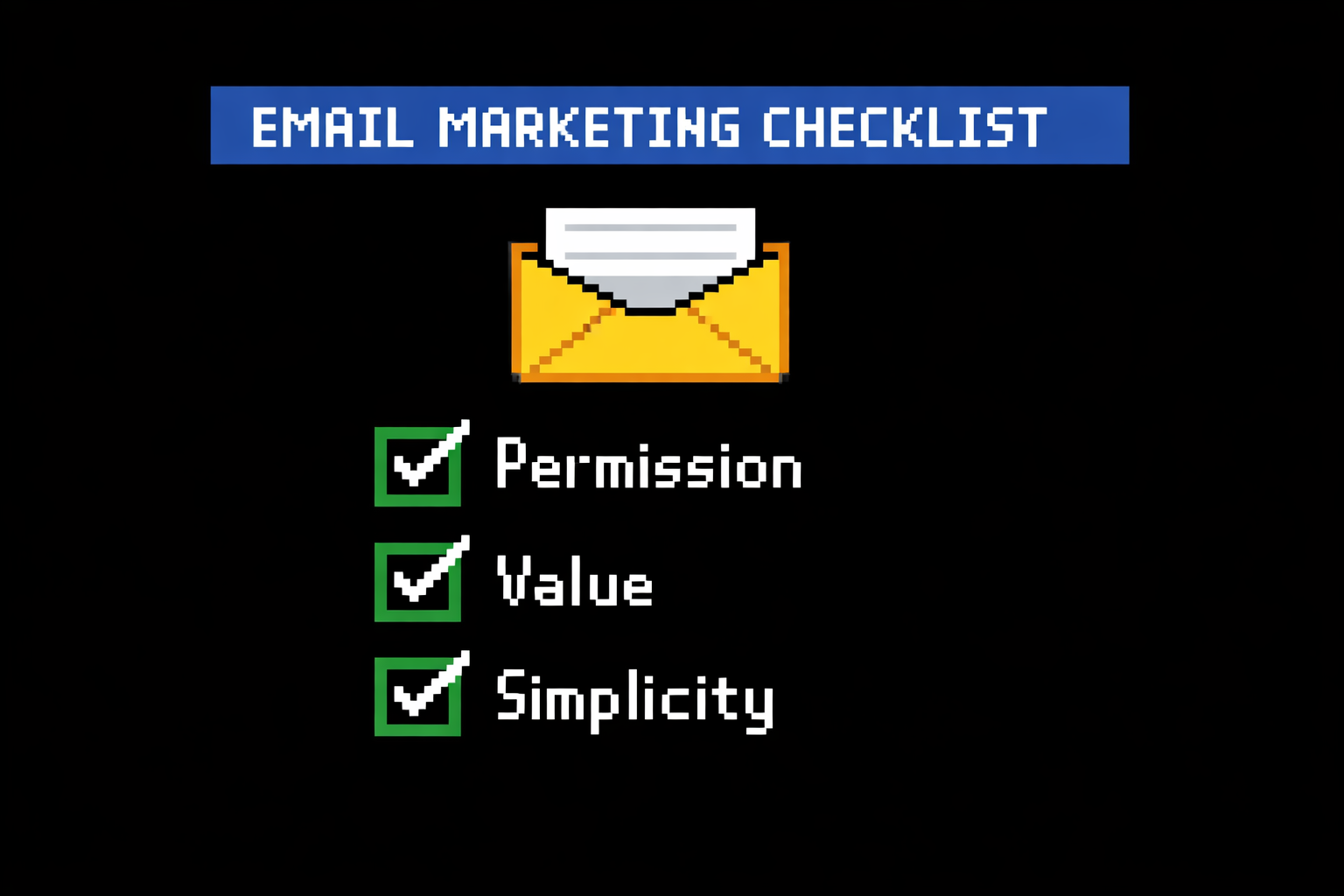
The Three-Item Checklist They Ignored
Before you send any marketing email, check these three boxes:
1. Ask for Permission
First of all, I didn’t give permission. I visited this gym occasionally, maybe three times total. When they set up an account for me, they didn’t ask if they could stay in touch. All I wanted was to pay for a day pass and use their equipment.
Now they think they have the right to send me “informative” emails.
They don’t.
No permission = No email.
2. Add Value
The email says: “We have gyms in our chain. Some of them may or may not have changed their operating hours.”
What’s in it for me? Nothing. Absolutely nothing.
To make this useful, I’d have to:
- Visit their website
- Navigate to the club locator
- Find the specific location I went to
- Check if anything changed
That’s four steps. Four steps to discover information they already know and could have just told me.
No value = No email.
3. Don’t Make Me Think
This is the core problem. They sent information that requires me to investigate whether it’s relevant.
That’s backwards.
If you have my data—and you do, because I used your service—you should use it to make my life easier, not harder.
No simplicity = No email.
My Response
I opted out. Thanks to Hey’s interface, it took one keyboard shortcut. Two clicks maximum.
Gone.
How It Could Have Been Done
If this email had followed the three rules, here’s what it might have looked like:
Subject: Extended hours at Zdrofit [specific location name]
Hey [Name],
You’ve visited our [specific club location] in the past, and we wanted to let you know we’ve extended our hours starting January 7:
New hours: Mon. – Fri.: 6:00 – 23:00 Sat. – Sun.: 7:00 – 22:00 (Previously: Mon-Fri 7:00-22:00, Sat-Sun 8:00-21:00)
This means more flexibility for early morning or late evening workouts.
If you’d prefer not to receive updates like this, [click here to unsubscribe].
See you at the gym, [Actual person’s name]
Notice what changed:
- Specific club location (I know this applies to me)
- Before/after comparison (I understand what changed)
- Why it matters (I know how it benefits me)
- Easy opt-out (I control the relationship)
- Personal sign-off (There’s a human behind this)
That’s an email worth reading.
If You’re Responsible for Email Marketing
Here’s your checklist. Print it. Tape it to your desk. Use it before you hit send.
Before You Send ANY Email:
1. Permission Check
- Did this person explicitly opt in to receive this type of message?
- Can they easily opt out?
- Would I be surprised to receive this if I were them?
2. Value Check
- Does this email solve a problem or provide useful information?
- Is the information specific and actionable?
- Would I personally find this worth reading?
3. Simplicity Check
- Is everything they need to know in this email?
- Does this require them to do extra work to understand?
- Could this be clearer or more direct?
If you can’t check all three boxes, don’t send the email.
The Books That Explain Why This Matters
If you work in marketing and haven’t read these, start here:
- “Don’t Make Me Think” by Steve Krug - About reducing cognitive load (applies to everything, not just websites)
- “Permission Marketing” by Seth Godin - About earning the right to communicate
Both books teach the same fundamental idea: respect people’s time and attention.
When you fail to do that, they’ll do exactly what I did.
They’ll unsubscribe.
Have you received emails like this? What’s your threshold for hitting “unsubscribe”?
Thanks for reading! If you'd like to share your thoughts send me an email.