Managers Aren't Getting Younger—The Data Proves Me Wrong

Managers Aren’t Getting Younger—The Data Proves Me Wrong
I’m a big football fan—or soccer, if you’re in the US. I love the history, the data, the statistics. Recently, I had a friendly argument with a fellow football enthusiast. My claim: young managers are taking over elite football. His claim: not at all.
Here’s the thing about the Internet: you can’t just let people be wrong.
The Hypothesis
I wanted to test my theory quickly and effortlessly. My hypothesis: the average age of trophy-winning managers has been decreasing over time. In other words, managers are younger when they win major trophies now than they were in the past.
To test this, I used Opera Neon. Here were my three prompts:
Analyze Champions League teams from 1992 until 2025. See who was the manager when winning the trophy. Check their age. Calculate the average age of all managers and the 5-year moving average.
Analyze UEFA Cup/Europa League winner teams from 1992 until 2025. See who was the manager when winning the trophy. Check their age. Calculate the average age of all managers and the 5-year moving average.
Analyze Premier League teams from 1992 until 2025. See who was the manager when winning the trophy. Check their age. Calculate the average age of all managers and the 5-year moving average.
The Results
Plot twist: managers aren’t getting younger. My gut feeling was completely wrong.
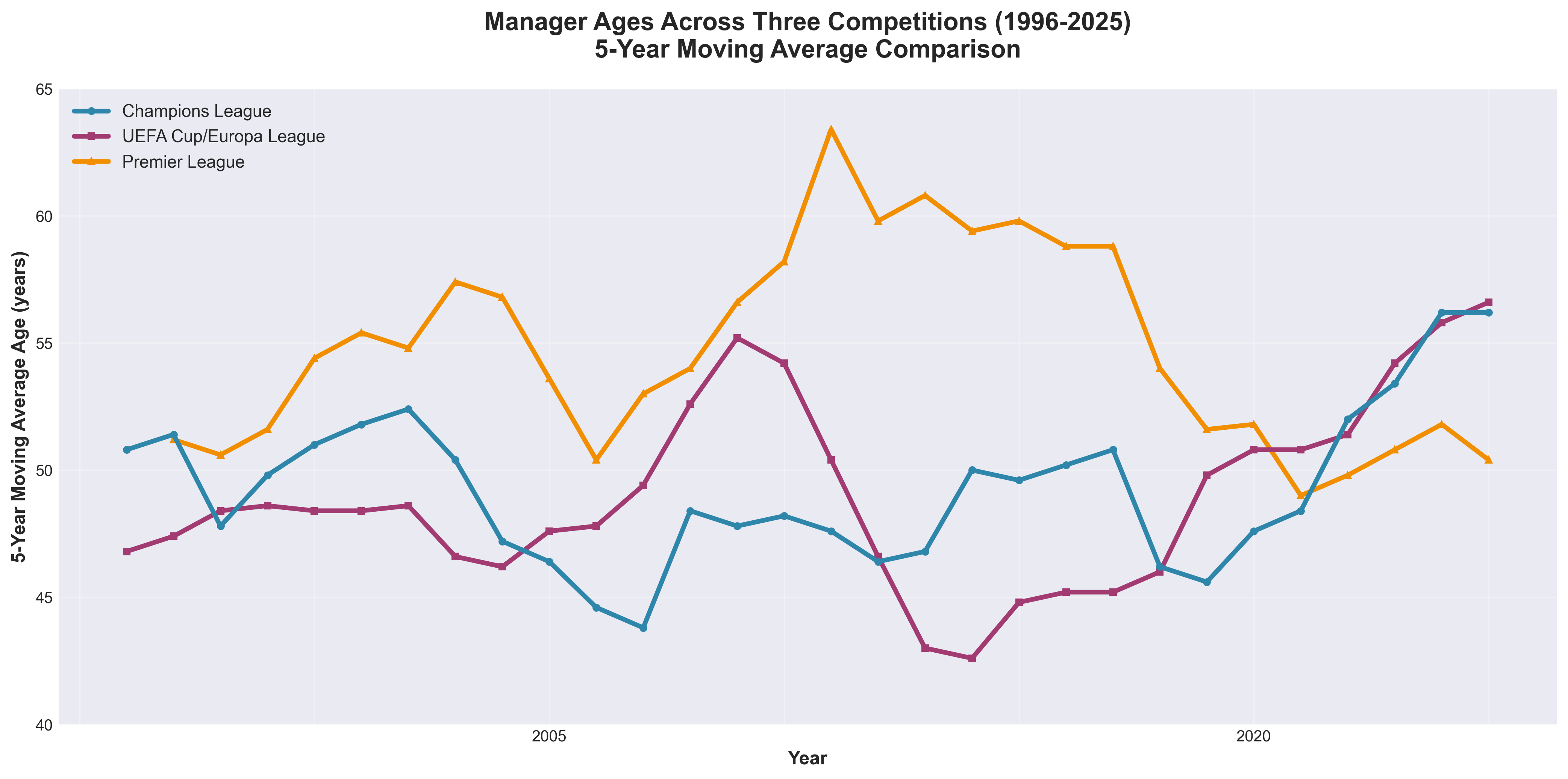
The chart above shows the 5-year moving average for all three competitions. The trend is clear: manager ages have been increasing, not decreasing.
Champions League (1992-2025)
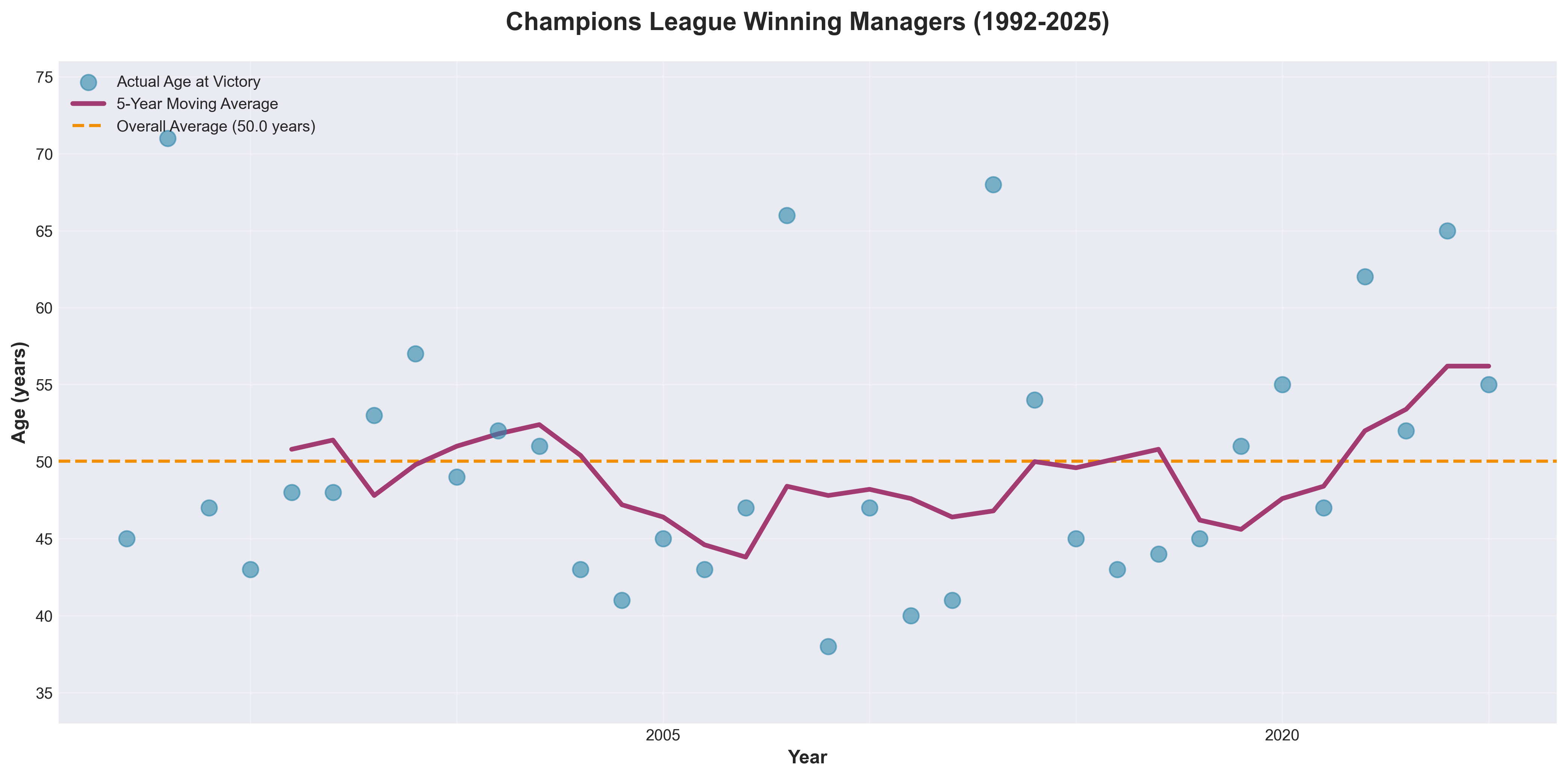
- Overall average age: 47.79 years
- Youngest winner: Pep Guardiola (38, Barcelona, 2009)
- Oldest winner: Raymond Goethals (71, Marseille, 1993)
- Recent trend: The 5-year moving average increased from 43.8 in 2007 to 56.2 in 2024-2025
UEFA Cup/Europa League (1992-2025)
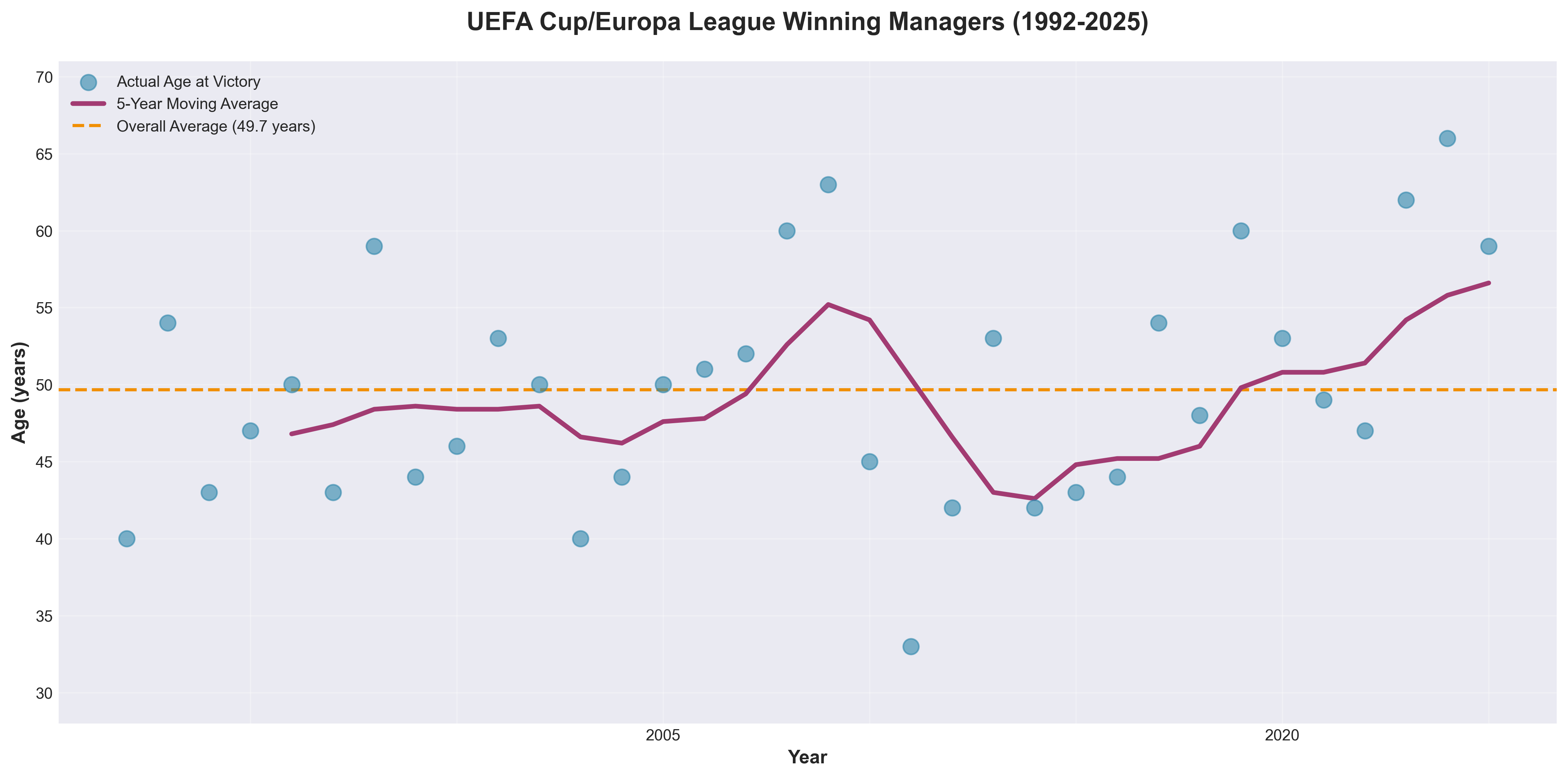
- Overall average age: 48.35 years
- Youngest winner: André Villas-Boas (33, Porto, 2011)
- Oldest winner: Gian Piero Gasperini (66, Atalanta, 2024)
- Recent trend: Moving average rose from 42.6 in 2014 to 56.6 in 2025
Premier League (1992-2025)
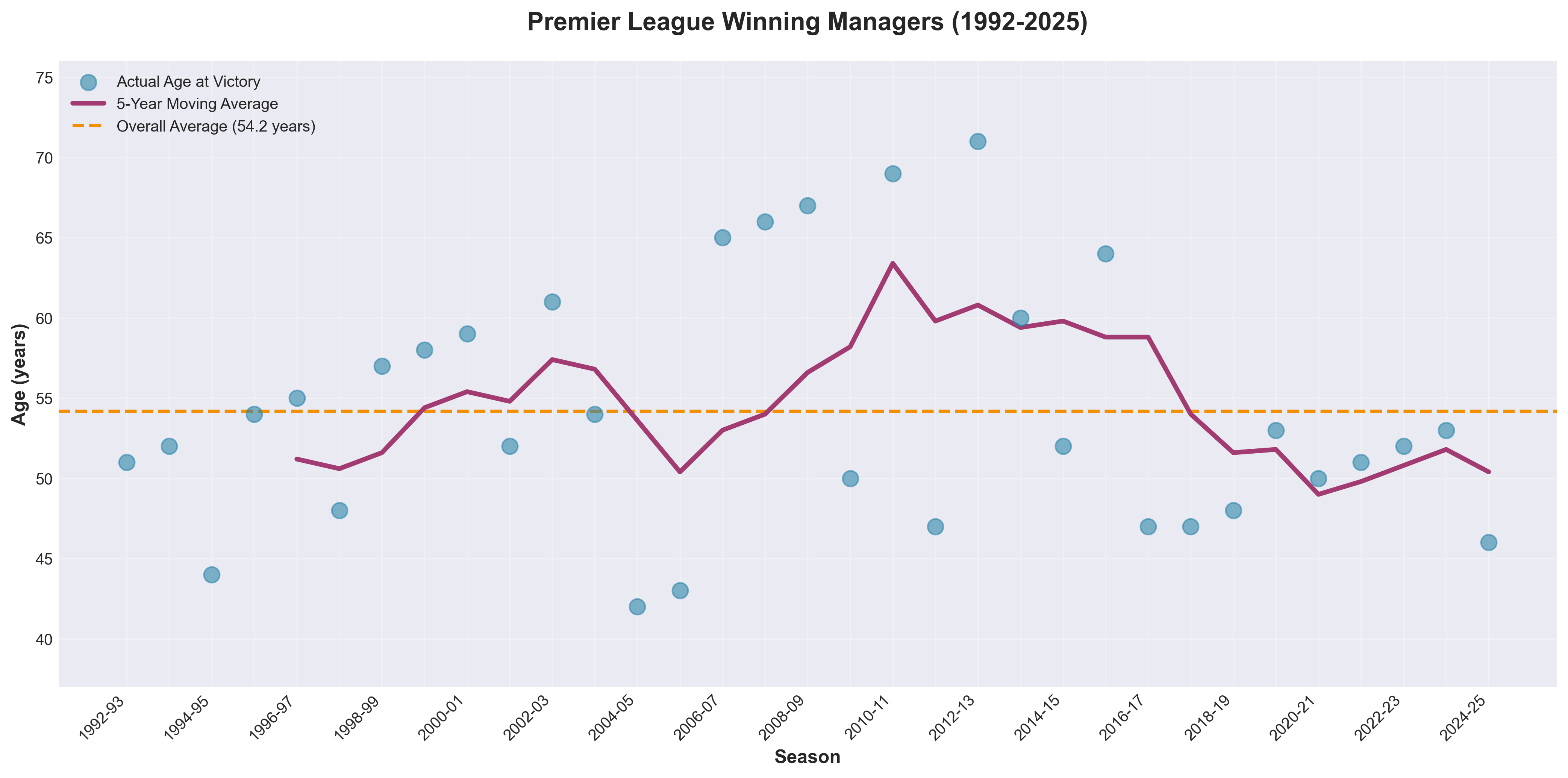
- Overall average age: 51.61 years
- Youngest winner: José Mourinho (42, Chelsea, 2004-05)
- Oldest winner: Alex Ferguson (71, Manchester United, 2012-13)
- Recent trend: Moving average peaked at 63.4 in 2010-11 (Ferguson’s dominance), then dropped to around 50 in recent years
The Power of AI Research
Here’s what made this effortless: I spent less than a minute writing three prompts. Opera Neon handled all the research in the background, pinged me with updates, and delivered complete analysis. No Wikipedia rabbit holes. No manual spreadsheets. Just pure, automated research.
The data reveals experienced managers—particularly Carlo Ancelotti and Pep Guardiola in recent years—have actually driven the average age upward, not downward.
What’s Next?
To get a fuller picture, I could analyze the top 4 finishers instead of just trophy winners. That would reveal whether younger managers are breaking into elite football at the highest level, even if they haven’t lifted trophies yet.
What I Learned
Data beats gut feeling. Every time.
I was convinced young managers were taking over. The numbers show the opposite. The 5-year moving averages are trending upward across all three competitions, proving that experience still dominates elite football.
And AI made hypothesis-testing absurdly easy. One minute of prompts. Zero manual research. Complete analysis delivered on a silver platter.
What’s your take? Do you think younger managers will start dominating in the next decade, or will experience always have the edge? Let me know what you think.
Thanks for reading! If you'd like to share your thoughts send me an email.