A Skill Is Just You, Written Down
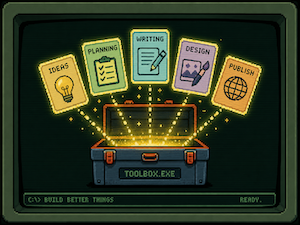
A Skill Is Just You, Written Down
I keep telling people: if you can describe what you want, you can build it now. I build my apps that way. I talk, Claude Code types.
This week I built something different. Not an app — a set of small tools for Claude Code itself. And there’s no code in any of them.
They’re all in one public repo: claude-code-skills.
Update · 4 July 2026 — Two more since I hit publish: translate-en-to-pl and translate-pl-to-en. They don’t just translate — they confirm what I meant first, then hand me three versions with the register and the reason for each one spelled out. Which quietly breaks my “they’re all thinking tools” line below. Fine by me: a skill turns out to be just as good at doing a thing as thinking one through. Still only me, written down.
What a skill is
A skill is a folder with one file inside: SKILL.md. The top says what it is and when to use it. The rest is plain instructions, like a note to a helpful colleague.
No code. No install. You drop the folder in, and Claude decides on its own when to use it.
That’s the hard part. A good skill fires at the right moment and stays quiet the rest of the time. The trick isn’t what it does. It’s teaching the tool when to use it.
My favourite: cruciable
I wanted to test an idea before committing to it. Not a yes-man. A real argument.
So I described it, and by the afternoon it existed. You give it a claim — “I should do X.” It runs a three-round debate: one side for, one side against. The rules: answer each other first, then add something new. No repeating. Examples welcome. At the end it hands you the strongest point on each side, and the one question it all comes down to.
Then it lets me decide.
I’ve used it on real decisions since. It’s good to watch both sides of your own head argue it out, in order, instead of going in circles.
The other four
All thinking tools, it turns out:
- mental-models — walks me through a hard choice using Naval Ravikant’s frameworks, one question at a time.
- thinking-partner — a ten-minute session that ends with one clear next step.
- stoic-mentor — a Stoic mentor that asks instead of tells. I keep it in English and Polish.
None of them are clever. That’s the point.
The twist
A skill isn’t code. It’s taste.
mental-models is how I like to break down a choice. stoic-mentor is the questions I want asked when I’m stuck. write-post wrote the first draft of this post.
I didn’t teach Claude a task. I wrote down how I think, and handed it over.
Why share them
The most honest thing you can show isn’t a polished demo. It’s what you actually use on a normal Tuesday.
Sharing them cost me nothing — a README, a licence, one push. But these are the tools I use when no one’s watching. That’s building in the open: don’t tell people what you can do. Hand them the thing you made.
Takeaways
- A skill is instructions, not code. If you can write a good note, you can write one.
- The hard part is the trigger. When it fires matters more than what it does.
- Write down how you think. The best tools aren’t clever. They’re yours.
- Share what you actually use. Real proof is the daily tool, not the demo.
Take any of them → github.com/jaal/claude-code-skills
Thanks for reading! If you'd like to share your thoughts send me an email.